Skip to content

Product Engineering

Build software that moves your business forward.

We take a product from a brief or a set of designs to software running in production: architecture, frontend, backend, mobile, payments, deployment. One team owns the whole build, so nothing falls between a designer, a frontend contractor and a backend contractor.

You might be here because

  • You have designs and a deadline, and nobody to build the backend.
  • Your MVP needs to be real software your first customers can pay for, not a prototype.
  • An internal process has outgrown spreadsheets and needs a proper system.
  • Your client asked for a customer portal and your team builds marketing sites.

Custom software development, from SaaS platforms to internal systems

SaaS development
Multi-tenant platforms with accounts, roles, subscriptions and billing.
Web applications
Dashboards, marketplaces and transactional apps in React and Next.js.
Mobile applications
iOS and Android from one Flutter codebase, with native integrations where needed.
MVP development
A scoped first version built on a foundation you will not have to throw away.
Customer portals
Self-service account areas that connect to the systems you already run.
Internal platforms and admin systems
Operations tools, back-office panels and reporting for your own team.
Backend systems
APIs, data models, background jobs and business logic behind any frontend.
Custom software
Software for a process that no off-the-shelf product fits.

What this looks like in practice

A B2B store where every buyer sees their own price

For TruScapes we built role-based B2B commerce with pricing tiers applied per buyer account, on NestJS, React and PostgreSQL.

A mobile app, a merchant dashboard and the API between them

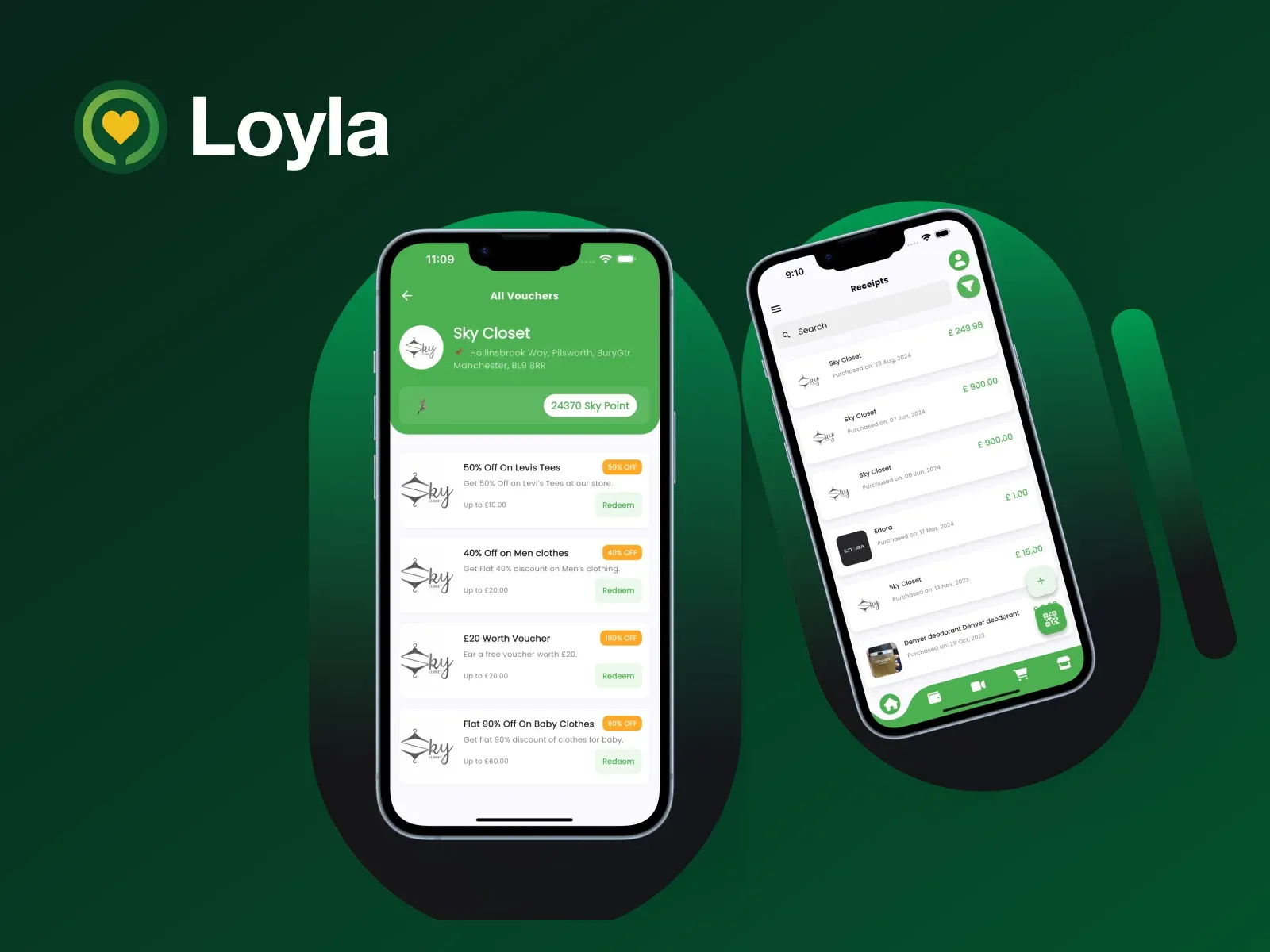
Loyla runs a shopper app, a business app and a web platform for independent shops from one backend.

A subscription SaaS with Stripe billing

Nanoinfluencers.io connects brands with nano-influencers and runs on tiered subscription plans.

How we approach it

  • Architecture is decided and written down before feature work starts.
  • Every build has a staging environment from the first week.
  • Code lives in your repository, or your client’s, from day one.
  • Handover includes documentation, deployment notes and access to everything.

A defined way to start

For businesses that need focused product development

Product Sprint

A fixed, short engagement with one goal: a first version, a major feature, or a prototype that settles a technical question.

  • Agreed scope and success criteria
  • Working software on staging
  • Source code in your repository
  • Notes on what to build next
Discuss Your Product

What a product engineering company does differently

A development shop builds the features on the list. A product engineering company is responsible for whether the product works: for its users, under load, and a year after launch.

In practice that means we question the brief before estimating it, design the data model and architecture before writing features, and treat deployment, monitoring and documentation as part of the build.

Custom software development or an off-the-shelf tool?

If an existing product does 90% of what you need, buy it. Custom software earns its cost when the process is your competitive advantage, when you are stitching four tools together to imitate one, or when licence fees grow faster than your revenue.

We will tell you when a subscription is the better answer. It costs us a project and saves you a mistake.

SaaS development: what has to be right from the start

Some decisions in a SaaS product are cheap on day one and painful in year two: how tenants are separated, how roles and permissions work, how billing maps to plans, and how the first customer’s data is kept apart from the hundredth’s.

As a SaaS development company we settle those early. We have built subscription platforms with Stripe billing, multi-role access and separate admin consoles, including Nanoinfluencers.io, Loyla and our own RipplePot.

Related work

All case studies

Questions about product engineering

How long does it take to build an MVP?
It depends on scope, which is why we scope before quoting. A focused first version of a web product is commonly a matter of weeks to a few months. We would rather ship a small product that works than a large one that is late.
Do you work from our designs, or design it too?
Either. Many clients and agencies arrive with Figma files, and we build from those. If you have no designs, we can design the interface as part of the project.
Which technologies do you use?
Most often React and Next.js on the web, Flutter for mobile, and Node.js with NestJS on PostgreSQL for the backend. We have also delivered in Java with Spring Boot and in Python. The stack follows the problem.
Who owns the code?
You do. It lives in your repository from the first commit, and the infrastructure runs in accounts you control.
Can you take over a product another team started?
Yes. We begin with a short audit so that we, and you, know what we are inheriting before committing to dates.

Have a technical problem you’re trying to solve?

Tell us what you’re building, fixing or automating. We’ll tell you honestly whether we can help.