Skip to content

AI & Automation

Automate the work that shouldn’t require people.

Most useful automation is unglamorous. Someone reads an email, copies figures into a system, checks a document against a rule, writes the same reply for the fortieth time. We find those steps, work out which ones software or a language model can do reliably, and build the automation into the tools your team already uses.

You might be here because

  • Your team re-types data from PDFs, emails or forms into another system.
  • Leads wait hours for a first reply because someone has to read and qualify each one.
  • Support answers the same questions from the same knowledge base every day.
  • You suspect AI could help but cannot tell a real opportunity from a demo.

AI automation services, from single agents to full workflows

AI agents
Agents that complete a defined task across your tools, with limits on what they may do.
AI workflows
Multi-step pipelines where a model handles the judgement and code handles the rest.
AI integrations
Language-model features added to a product you already have.
RAG applications
Answers grounded in your own documents, with sources shown.
Document processing
Extraction of structured data from invoices, contracts, statements and forms.
Lead qualification
Inbound enquiries read, scored, enriched and routed to the right person.
Customer support automation
Drafted or automatic replies for routine questions, with handoff to a person.
Internal AI tools
Search and assistants over your own knowledge, behind your own access controls.
Business process automation
Rule-based automation where AI is not needed at all.

What this looks like in practice

A monthly report nobody has to compile

Competitor Marketing Watchdog gathers competitor activity and uses an LLM to turn it into a written strategy report each month.

Plans generated from a person’s constraints

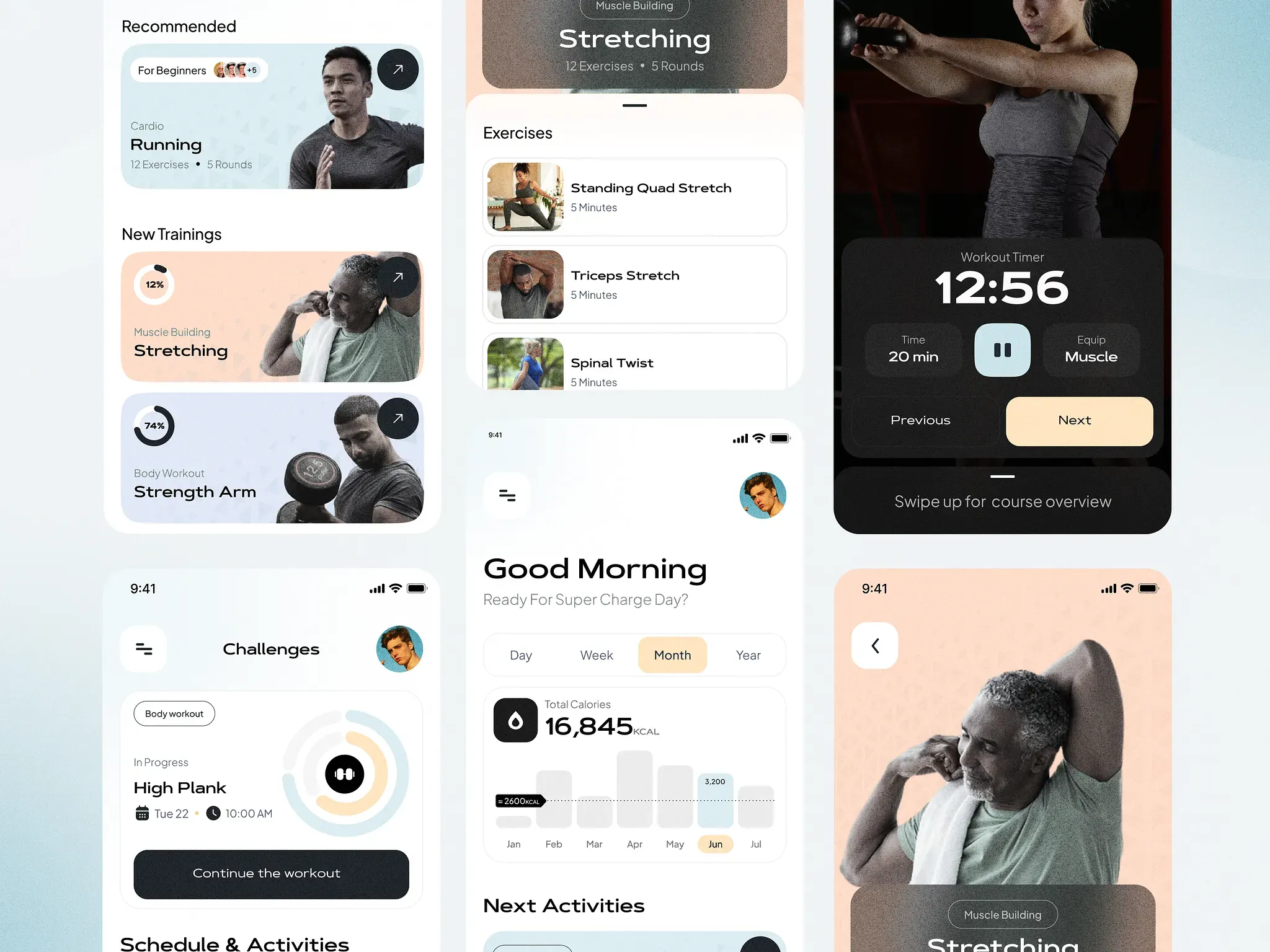
Fitness AI Planner generates training and diet plans from a user’s goals, equipment and locally available food.

Agents, approvals and a cost for every run

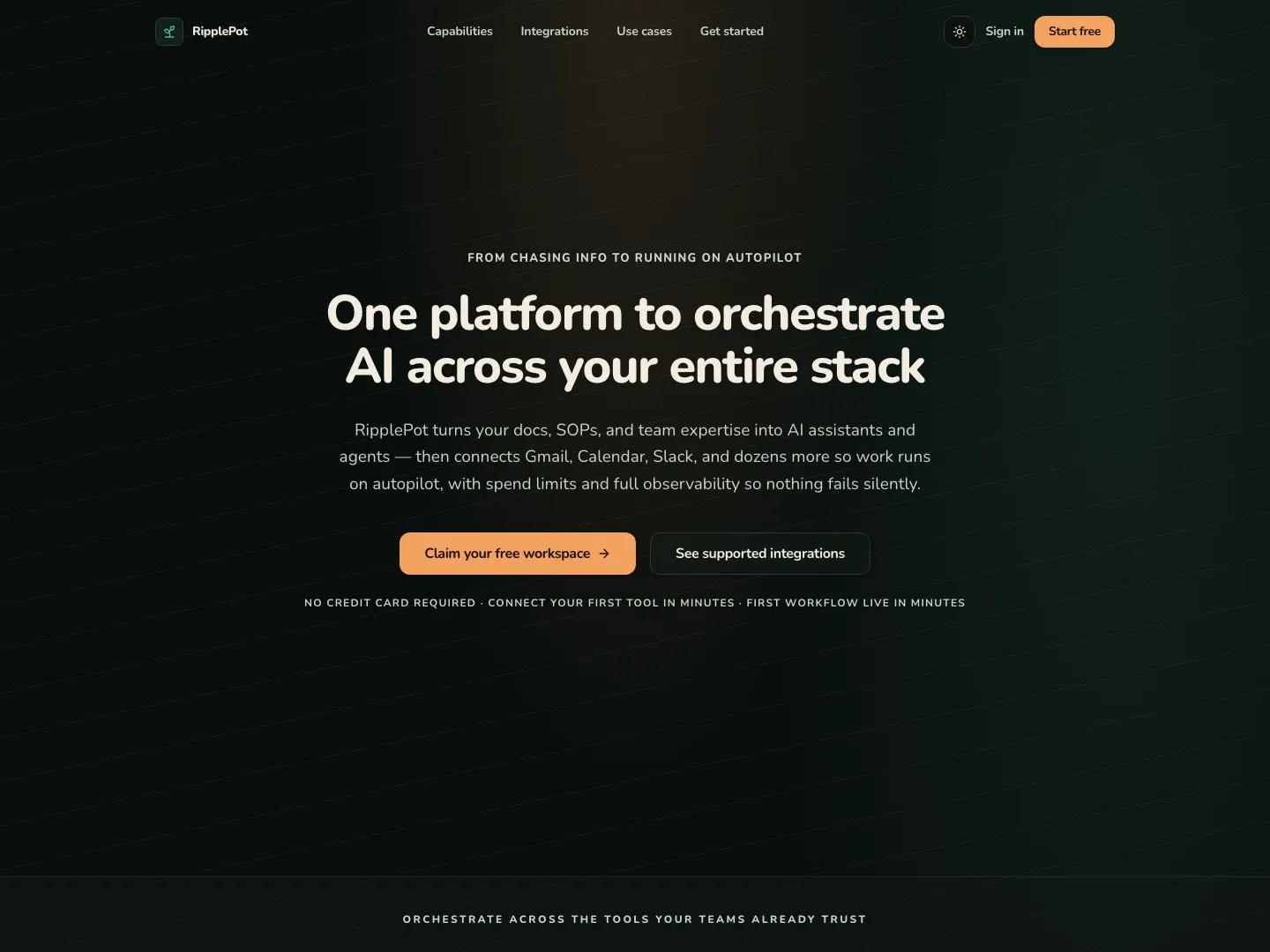
RipplePot, our own workflow platform, runs AI agents alongside app actions and human sign-off, and meters what each run costs.

How we approach it

  • We test feasibility on your real data before proposing a build.
  • Every automation has a fallback: when the model is unsure, a person decides.
  • Outputs are logged so accuracy can be measured rather than assumed.
  • If a rule and a script will do the job, we will say so and skip the model.

A defined way to start

For businesses that believe AI could reduce manual work

AI Automation Discovery

We look at how the work is done today and tell you which parts can be automated reliably, and which cannot yet.

  • Workflow analysis
  • Automation opportunities
  • AI feasibility on your own data
  • Proposed architecture
  • Implementation roadmap
Explore an Automation Opportunity

What an AI automation agency should actually deliver

A demo that impresses in a meeting is easy to build. An automation your team still trusts after six months is not. The difference is everything around the model: what it is allowed to do, what happens when it is unsure, how its output is checked, and what each run costs.

We build that surrounding system. It is most of the work, and it is what makes the automation usable.

AI workflow automation: where the model belongs

In a well-built workflow the language model handles the steps that need reading or judgement, and ordinary code handles everything else. Totals are added by code. Records are written by code. Rules are enforced by code.

The model reads the email, classifies the request, extracts the fields or drafts the reply. Keeping it to those jobs is what makes AI workflow automation predictable.

AI agent development with limits built in

An agent is a model that can decide which tool to use next. That is powerful and needs boundaries: a fixed set of tools, a cap on steps, a budget per run, and a person who approves anything consequential.

Those are the patterns behind RipplePot, the workflow platform we built, where agents, app actions and human approvals are steps in the same flow and every run is metered.

Related work

All case studies

Questions about AI & automation

Which business processes are good candidates for AI automation?
Ones that happen often, start from text or documents, could be done by a new hire with a page of instructions, and where a mistake is cheap to catch. Extracting data from documents, qualifying leads and drafting routine replies usually qualify.
Do we have to send our data to OpenAI?
No. We work with several model providers, and for sensitive material we can run open models on your own infrastructure. GL Chat, one of our projects, answers questions from private documents using locally hosted models.
How accurate will it be?
We measure that before you commit to a build, by testing against real examples from your own process. You get a number, not a promise.
What is RAG, and do we need it?
Retrieval-augmented generation means the model answers from your documents instead of its general knowledge, and shows which passages it used. You need it when answers must be grounded in your own material.
What does AI automation cost to run?
Each run has a model cost that depends on volume and the model chosen. We design for the cheapest model that does the job reliably, and we meter usage so the cost is visible.

Have a technical problem you’re trying to solve?

Tell us what you’re building, fixing or automating. We’ll tell you honestly whether we can help.